



You already know your website needs work. Maybe it looks dated. Maybe it loads too slowly. Maybe you just watched a competitor launch something that makes yours feel like it’s stuck in 2014. So the obvious question is: how much is a website redesign actually going to cost?
The answer depends on more things than most guides will tell you upfront. The real price of a website redesign in 2026 ranges from a few hundred dollars if you do it yourself, all the way past $150,000 for a full enterprise rebuild. That’s a huge gap, but it comes down to what you actually need.
This guide breaks down every pricing tier, explains what you actually get at each level, and helps you figure out what your specific situation requires before you speak to a single agency or freelancer.
Key Takeaways
- Website redesign costs in 2026 range from almost $0 to over $200,000. You can do a simple DIY version for under $3,000 using templates. Freelancers usually charge $2,000 to $15,000. Small agencies cost $5,000 to $30,000. Bigger or more complex projects with custom features can run from $75,000 to $200,000 or even higher.
- The final price depends on how much work your site actually needs. A quick visual refresh (just updating colors, fonts, and images) is the cheapest. A full redesign that improves layout, speed, and ease of use costs more. Starting completely from scratch with new features is the most expensive.
- Choose the right option for your budget and business needs. Use DIY if your budget is very tight and the site is simple. Hire a freelancer or small agency for most small businesses. Go for a larger agency only if your website is big, drives a lot of sales, or needs special tools. Always add extra money for ongoing costs like hosting and maintenance.
What Counts as a Website Redesign?
Before getting into numbers, it is worth being precise about what “redesign” actually means. Not every situation calls for the same level of work, and understanding the difference will save you from overpaying or underpaying and ending up with something that does not solve your problem.
There are generally four levels of website work, and they carry very different price tags:
- Visual refresh: This focuses on appearance only. It includes updates to colors, fonts, images, and small layout changes, without changing how the site is structured or how it works. It is often enough when the branding feels outdated but the site still performs well.
- Partial redesign: This updates key pages such as the homepage, main landing pages, or contact page, while leaving the rest of the site as it is. It is commonly used when improving conversions or usability without rebuilding everything.
- Full redesign: This involves reworking the design and structure of the entire website. It may also include changes to the platform or content setup, while keeping the core purpose of the site the same. This is what most people mean when they talk about a website redesign.
- Full rebuild: This starts from scratch. It usually includes a new platform, new structure, new design, and new content. It is closer to building a new website than updating an existing one.
When people search for website redesign costs, they are usually thinking about a full redesign or a partial one, and the following sections below covers both, along with the complete spectrum.
Signs a Website Redesign May Be Needed
Websites often stop performing well long before they start looking outdated. When results drop or users struggle, it usually points to deeper issues. Here are some common signs to watch for:
- Traffic, impressions, or conversions have been declining without a clear reason
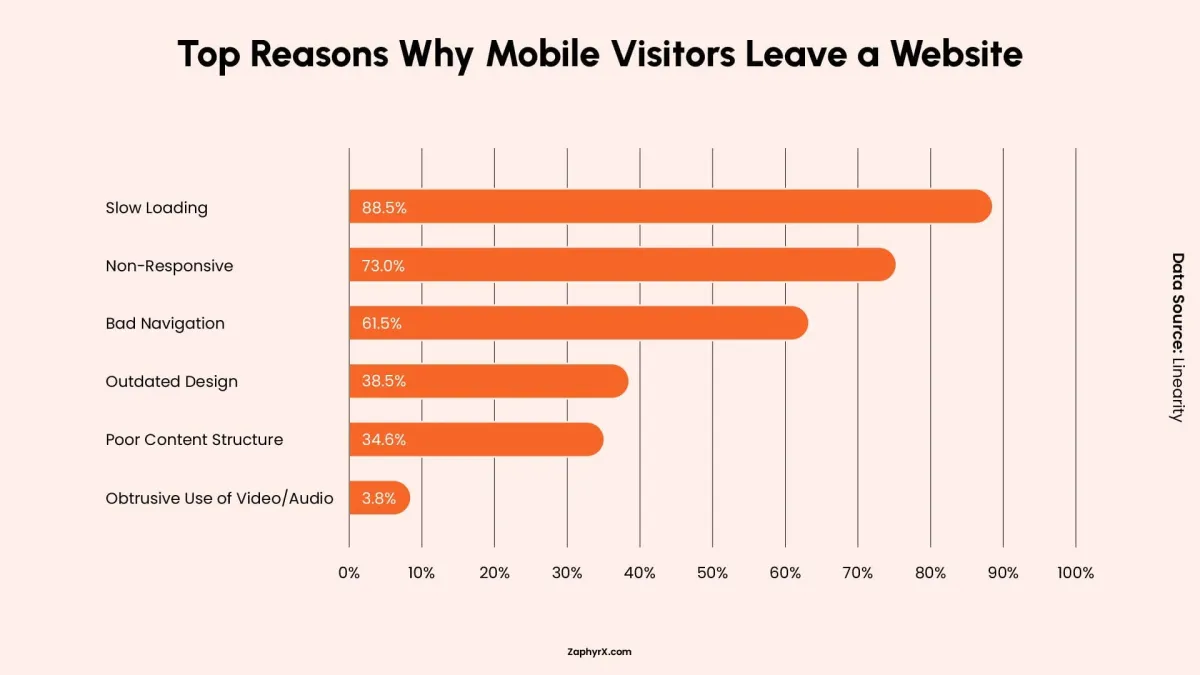
- Pages take too long to load, especially on mobile
- Visitors struggle to find information or move through the site easily
- The website no longer reflects your current brand or positioning
- The structure feels dated or harder to use compared to newer sites
- Search visibility has dropped, making content harder to find
- The site is harder to maintain or feels less secure over time
When several of these show up together, the problem is rarely isolated. Performance, structure, and user experience are closely linked, so small fixes often do not go far enough.
As a business grows, its messaging and direction change. If the website still reflects an earlier version, it can create a disconnect for visitors. This often leads to lower engagement, reduced trust, and missed opportunities.
In these cases, a redesign is less about updating the look and more about fixing the foundation so the website supports current goals and expectations.
Once this is clear, the next step is understanding what typically drives a redesign and whether it is the right investment.
Website Redesign vs Website Refresh: How to Choose
A full website redesign is a serious investment. It takes time because it changes how the site is structured and how it works, not just how it looks. Before committing to that level of change, it helps to first decide whether a full redesign is necessary or if a lighter update would be enough.
| Aspect | Website Refresh | Website Redesign |
|---|---|---|
|
Scope |
Surface-level (visuals, content tweaks) |
Full rebuild (structure, UX, features) |
|
Timeline |
Days to a few weeks |
Weeks to months |
|
Cost |
Lower (budget-friendly) |
Higher (significant investment) |
|
SEO Impact |
Minimal disruption; preserves rankings |
Potential temporary dip; requires planning |
|
Disruption |
Low (quick rollout) |
Higher (possible downtime) |
|
Best For |
Cosmetic updates, trend alignment |
Rebranding, scalability, major fixes |
The table gives a high-level view, but the difference becomes clearer when you look at how each approach works in practice:
- A website refresh (also called a facelift) involves minor, surface-level updates to modernize your site’s appearance and usability without altering its core structure or functionality. This typically includes changes like updating colors, fonts, images, typography, or minor layout tweaks to align with current design trends. It’s ideal for sites that are still performing well but look dated.
- In contrast, a website redesign is a comprehensive overhaul that revamps the site’s architecture, user experience (UX), navigation, and backend functionality from the ground up. This often means rebuilding pages, reorganizing content, adding new features (e.g., e-commerce tools or integrations), improving mobile responsiveness, or migrating to a new content management system (CMS). It’s suited for sites with deeper issues like poor performance, outdated tech, or mismatched business goals.
Is a Website Redesign Worth It? The Numbers Say This
Before looking at returns, it helps to understand what is at stake.
Users form opinions about a website almost instantly. Research shows that people can make an initial visual judgment in as little as 50 milliseconds. That decision often happens before they read a single word.
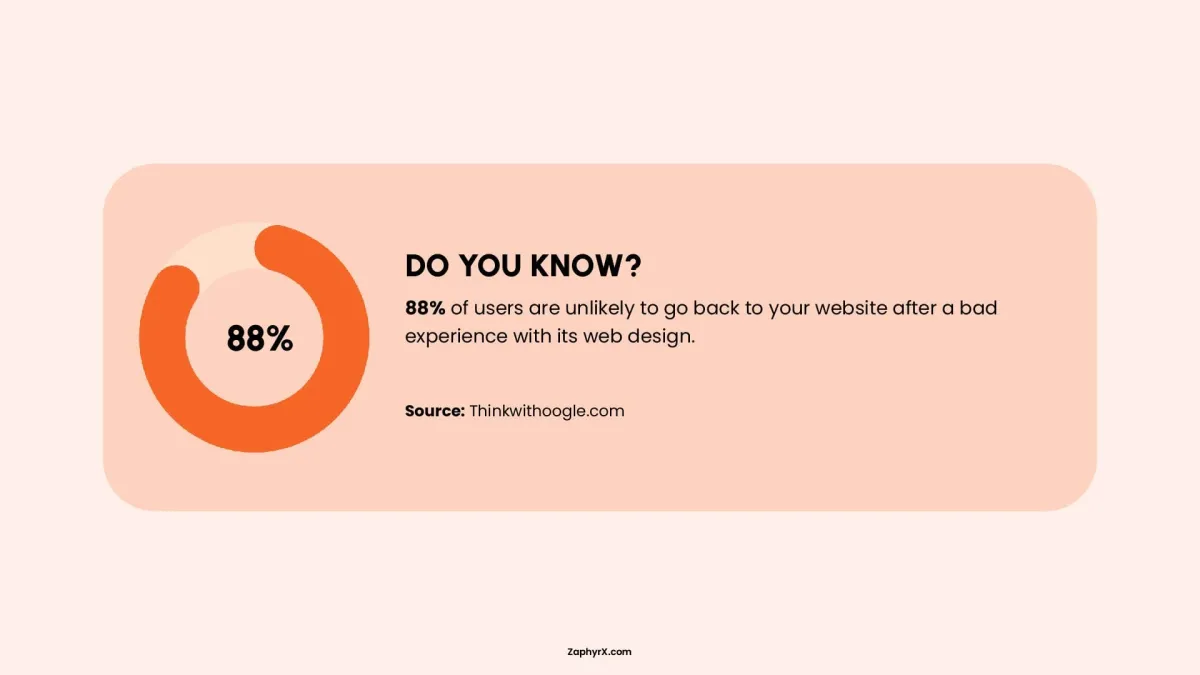
This has a direct business impact. Around 75% of users judge a company’s credibility based on its website design, and 89% will choose a competitor after a poor user experience. If the site feels outdated, slow, or difficult to use, trust drops quickly and users leave.
This is why most redesigns are not driven by aesthetics alone. According to Goodfirms research , 80.8% of businesses start a redesign because of low conversion rates. When a website stops turning visitors into customers, it becomes a performance issue, not just a design concern.
Once that point is reached, the upside of a well-executed redesign can be significant.
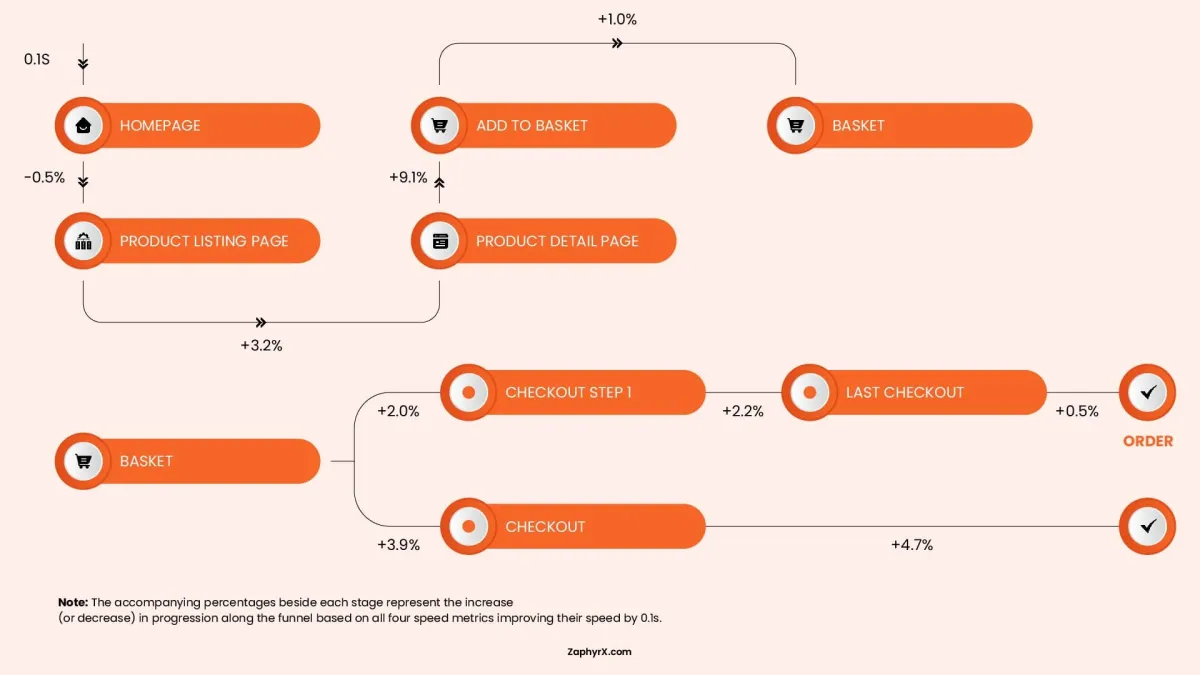
Studies from Google and Deloitte show that improving page speed by just 0.1 seconds can increase conversion rates by up to 8% in retail and similar sectors.
In broader terms, strong UX improvements can deliver substantial returns. Forrester research has widely cited that every dollar invested in UX can return up to $100 in value across successful projects. While this is not guaranteed, it highlights how impactful usability and performance improvements can be.
In practice, many businesses see conversion improvements in the range of 30 to 80% after a well-planned redesign, especially when performance, structure, and SEO are addressed together. For ecommerce, results can appear within a few months. For B2B, the gains often show up in lead quality and engagement over a longer period.
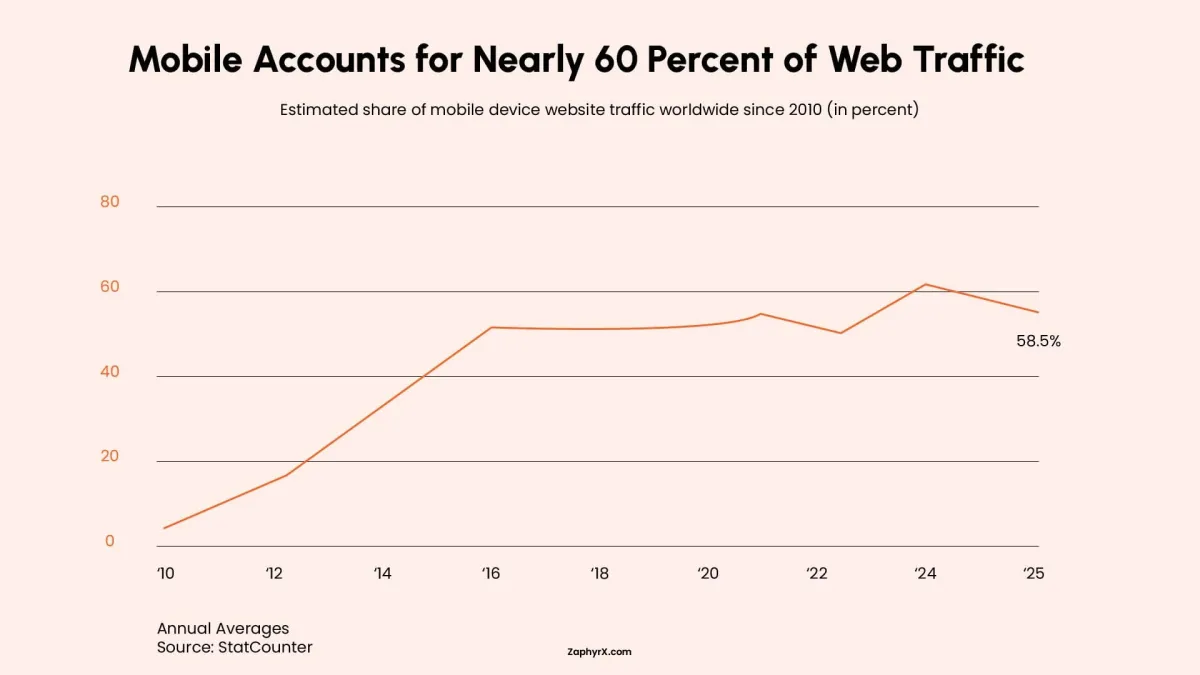
There is also a structural shift to consider. With mobile now accounting for over 60% of global web traffic, websites that are not optimized for mobile are at a clear disadvantage. Poor responsiveness, slow load times, and unclear navigation directly affect conversions.
That said, a redesign is not always the right move.
If a website does not have enough traffic, a redesign will not create demand on its own. If the product or offer is weak, a better design will not fix it. A redesign delivers the most value when the website itself is the main constraint on growth.
A Simple Look at Website Redesign Pricing in 2026
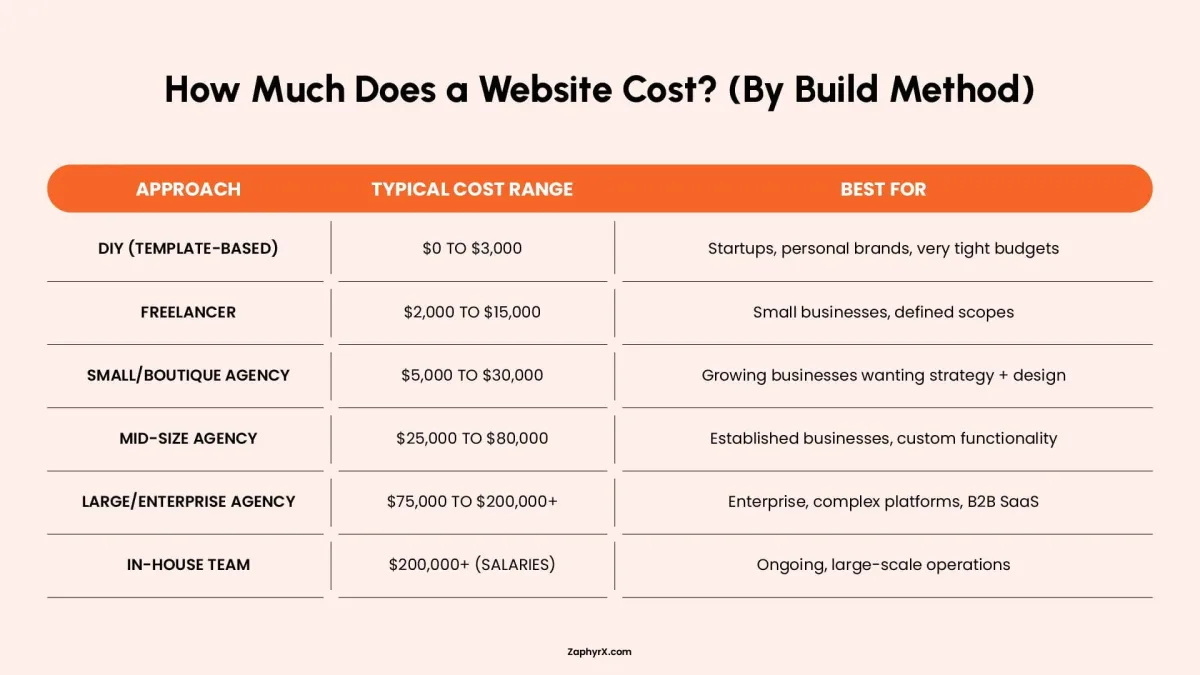
At the higher end, website redesign projects involve comprehensive rebuilds with custom integrations, advanced CMS app development, and full SEO migration to preserve and improve search performance. Overall, website redesign costs in 2026 vary significantly depending on the level of complexity, strategic input, and scalability required.
Lower-tier solutions focus on speed and affordability, making them ideal for simple needs and quick launches. Mid-tier projects introduce strategy, user experience, and growth-focused enhancements. At the top end, enterprise-level builds deliver advanced scalability, deep integrations, and high-performance systems designed for complex operations.
DIY (Template-Based) Websites ($0 - $3,000)
Before a single design concept takes shape, it’s important to understand your business inside and out. This phase involves gathering insights about your target audience, competitors, and goals. The idea is to define what your website should achieve, whether it’s conversions, brand awareness, or lead generation.
A well-structured custom website development plan starts with a clear roadmap. This includes defining user journeys, identifying core pages, and setting key performance indicators (KPIs) to measure success.
Best For: Startups, solopreneurs, personal brands, or early-stage ideas validating a concept.
Core Features:
- Pre-built templates with limited customization
- 1–5 essential pages (Home, About, Services, Contact)
- Drag-and-drop editing interface
- Basic mobile-friendly layouts
- Stock images and simple contact forms
- Self-service setup or minimal onboarding support
Key Limitation: Limited flexibility, performance optimization, and long-term scalability.
Estimated Timeline: 1–4 weeks
Freelancer Websites ($2,000 - $15,000)
Freelancer-built websites provide a step up in quality with custom design adjustments and foundational optimization. These projects focus on professional presentation and essential functionality without deep strategy or complex integrations. Execution is the primary focus, making this tier ideal for clearly defined, low-complexity projects.
Best For: Small businesses, local services, and brochure-style websites.
Core Features:
- 5–10 custom-designed pages
- Responsive design across devices
- Foundational SEO setup (meta tags, site speed improvements)
- Contact forms and basic lead capture
- CMS implementation (commonly WordPress)
- Basic analytics tracking (e.g., Google Analytics)
- Short-term post-launch support (1–3 months)
Key Advantage: Cost-effective balance between customization and affordability.
Estimated Timeline: 4–8 weeks
Small/Boutique Agency Websites ($5,000 - $30,000)
Boutique agencies introduce strategy, branding, and user experience into the process. These projects go beyond execution to align the website with business goals, improving conversion rates and user engagement. The focus shifts from “just building a site” to creating a cohesive digital experience.
Best For: Growing businesses, professional services, and light e-commerce brands.
Core Features:
- 10–20 pages with structured content strategy
- Custom UI design aligned with brand identity
- Mobile-first, user-focused design approach
- Conversion-oriented on-page SEO
- Lead generation systems and basic integrations
- CMS setup with scalable structure
- Performance tracking and reporting
- Extended support (3–6 months)
Key Advantage: Strategic design + improved user experience for measurable growth.
Estimated Timeline: 6–12 weeks
Mid-Size Agency Websites ($25,000 - $80,000)
Mid-size agencies deliver advanced, feature-rich websites built for scale. These projects include deeper UX research, custom functionality, and integrations that support marketing, sales, and operations. This tier marks the transition from marketing websites to digital platforms.
Best For: Mid-market companies, SaaS businesses, and scalable e-commerce operations.
Core Features:
- 20–50 pages or dynamic content systems
- Advanced UX/UI design based on user behavior
- E-commerce, membership, or SaaS functionality
- Technical SEO (schema markup, site architecture)
- API integrations (CRM, email platforms, automation tools)
- Custom web development (dashboards, tools, web apps)
- Data-driven optimization (analytics, A/B testing)
- Ongoing support and training (6–9 months)
Key Advantage: Scalability, automation, and performance-driven architecture.
Estimated Timeline: 12–20 weeks
Large/Enterprise Agency Websites ($75,000 - $200,000+)
Enterprise-level projects are complex ecosystems designed for high traffic, multiple stakeholders, and mission-critical performance. These builds require cross-functional teams, rigorous planning, and enterprise-grade infrastructure. The focus is on scalability, security, compliance, and long-term maintainability.
Best For: Enterprises, B2B SaaS platforms, high-traffic e-commerce, and multi-brand organizations.
Core Features:
- 50+ pages or multi-site / multi-brand architecture
- Fully bespoke design and high-performance development
- Complex systems (enterprise e-commerce, portals, platforms)
- Enterprise SEO strategy and large-scale content migration
- Deep integrations (ERP, CRM, payment systems, internal tools)
- Advanced security (compliance, DDoS protection, access control)
- Custom analytics dashboards and reporting systems
- Dedicated team and long-term support (12+ months)
Key Advantage: Robust, secure, and scalable systems built for large-scale operations.
Estimated Timeline: 20–40+ weeks
In-House Team Websites ($200,000+ in Salaries)
In-house development teams provide full ownership and continuous evolution of digital platforms. Instead of a one-time project, this model supports ongoing innovation, iteration, and internal control. This approach shifts investment from project-based spending to long-term capability building.
Best For: Large organizations with continuous development needs, strict security requirements, or internal product teams.
Core Features:
- Unlimited scalability and continuous feature development
- Fully custom-built platforms and internal systems
- Ongoing UX, SEO, and performance optimization
- Deep integration with internal infrastructure
- Enterprise-grade security and governance
- Internal knowledge transfer and team training
- Continuous iteration and product evolution
Key Advantage: Control, flexibility, and long-term strategic ownership.
Estimated Timeline: 3–6 months initial setup, followed by ongoing development
Ultimately, selecting the right tier depends on your business objectives, technical requirements, and long-term digital strategy. Costs can vary widely based on the scope of work, feature requirements, and the expertise of the provider.
Should You Hire an Agency, a Freelancer, or Do It Yourself?
The right choice depends on four key factors: your budget, project complexity, timeline, and how critical your website is to your business performance.
Choose DIY (Template-Based Tools) if:
Your budget is under $3,000 and you need a simple, informational website. DIY platforms are best for small sites with fewer than 10 pages, where speed and affordability matter more than customization or scalability. This option works well if you are comfortable building and managing the website yourself and it is not a primary revenue driver.
Choose a Freelancer if:
Your budget is typically between $2,000 and $15,000 and your project has a clearly defined scope. Freelancers are ideal for brochure-style websites and small business sites with straightforward requirements. This option works best if you are willing to manage communication, feedback, and approvals directly and prefer a more hands-on working relationship.
Choose a Boutique or Mid-Size Agency if:
Your budget starts around $10,000+ and your website plays a meaningful role in lead generation, sales, or brand positioning. Agencies are best when you need both strategy and execution. This option is ideal if you prefer a fully managed process, need UX and conversion-focused design, and want ongoing post-launch support.
Choose a Large or Enterprise Agency if:
Your project is complex, high-budget, and business-critical. This is typically the right fit for competitive industries where performance, design quality, and integrations directly impact revenue. Large agencies handle enterprise requirements such as multi-system integrations, multi-region builds, compliance needs, and long-term optimization at scale.
7 Key Factors That Determine Your Website Redesign Price
While pricing ranges give you a general estimate, your final cost depends on several key variables. These factors determine where your project falls within each pricing tier:
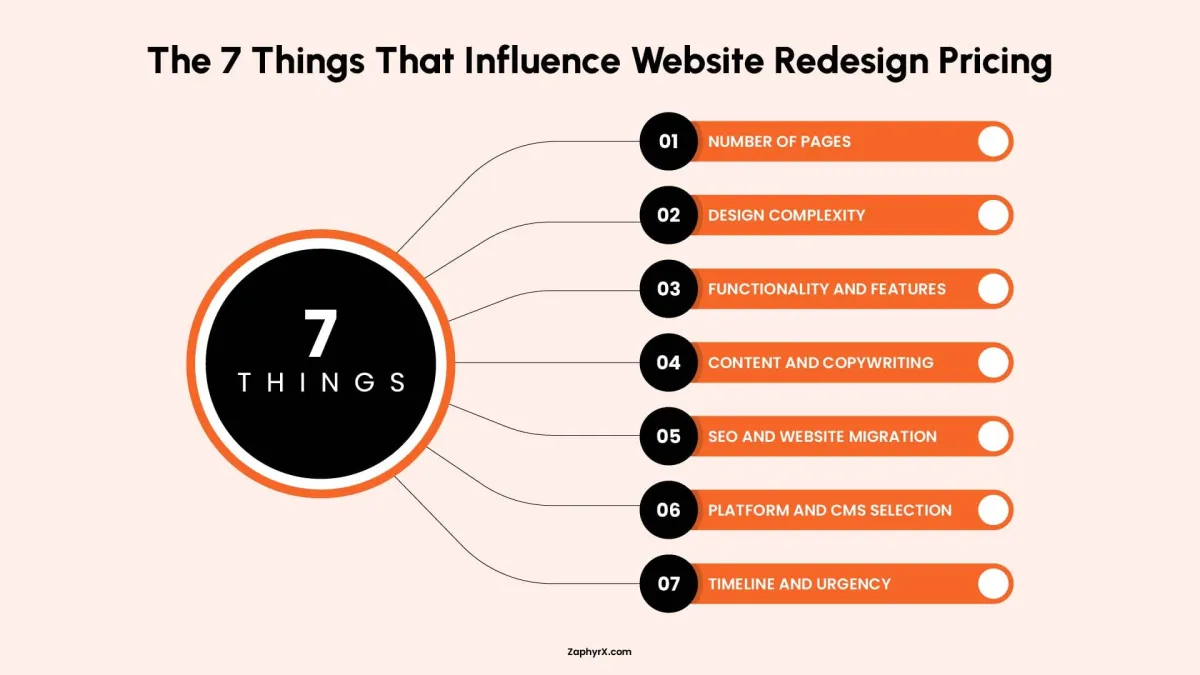
1. Number of Pages
The size of your website directly impacts cost. More pages require additional design layouts, content migration, quality assurance, and overall production time. While pricing doesn’t scale linearly, a 50-page website will require significantly more effort and investment than a 10-page site.
2. Design Complexity
The level of visual customization plays a major role in pricing. Template-based or minimal designs are far more cost-effective, while fully custom designs require more time and expertise. Elements such as custom illustrations, animations, interactive components, and unique branding systems will increase the overall cost.
3. Functionality and Features
Advanced functionality adds development complexity. Features like custom search, user portals, booking systems, calculators, and product configurators all require additional build time. Integrations with third-party tools, such as CRMs, payment gateways, or platforms like Salesforce, HubSpot, or Shopify, also increase both implementation and testing effort.
4. Content and Copywriting
Content is often overlooked but can significantly impact your budget. Many redesign projects do not include copywriting by default. If your existing content needs to be rewritten or optimized, professional copywriting services can add substantial cost especially for technical, industry-specific, or conversion-focused content.
5. SEO and Website Migration
A poorly managed redesign can negatively affect your search engine rankings. Changes to URLs, missing redirects, broken links, or lost metadata can lead to traffic drops. Proper SEO migration, including redirect mapping, technical audits, and post-launch monitoring, adds to the cost but is essential for preserving your existing search visibility.
6. Platform and CMS Selection
Staying on your current platform is typically more cost-efficient than migrating to a new one. Moving between platforms (for example, from WordPress to Webflow or Shopify) requires additional setup, development, data transfer, and team training, all of which increase the project scope and cost.
7. Timeline and Urgency
Project timelines directly influence pricing. Accelerated or rush projects require additional resources, tighter coordination, and sometimes external support, which increases costs. A realistic timeline allows for better execution, fewer compromises, and more cost-effective delivery.
Hidden Website Costs You Must Budget For in 2026
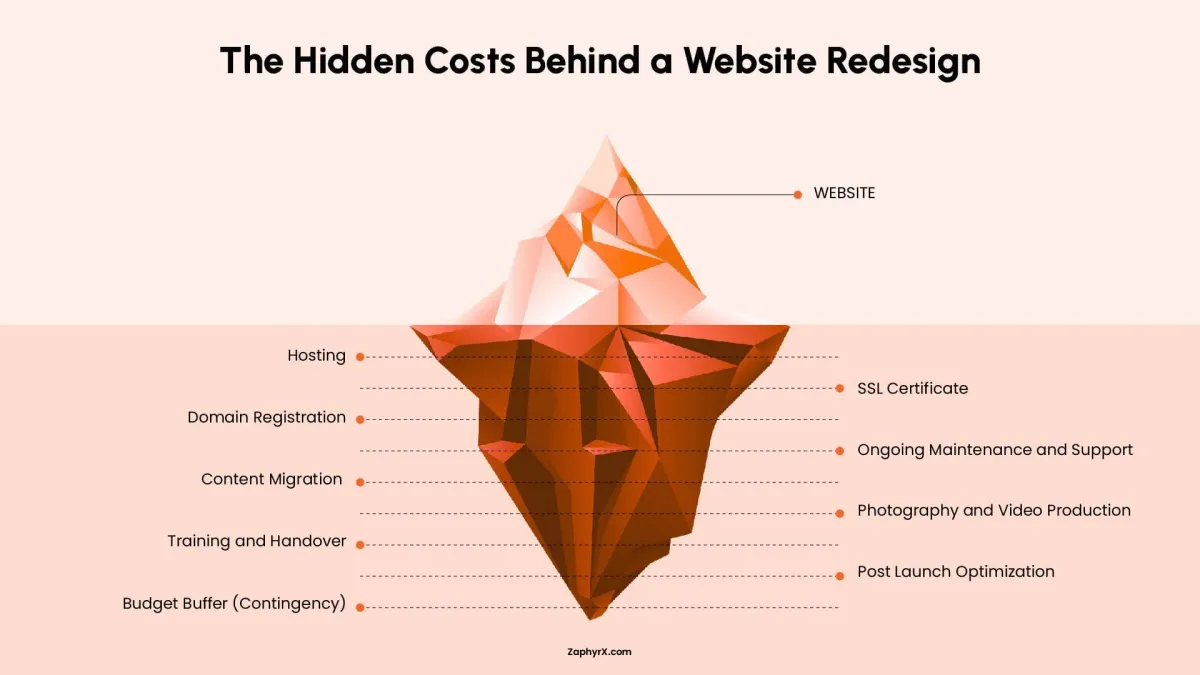
Beyond the initial design and development quote, there are several ongoing and often overlooked costs that can significantly impact your total website investment. Planning for these in advance helps avoid surprises and keeps your project financially on track.
Hosting
Website hosting typically costs between $20 and $500 per month, depending on traffic levels, performance expectations, and security requirements. Managed hosting solutions are more expensive but provide better uptime, support, and maintenance. For high-traffic or enterprise websites running on dedicated infrastructure, costs can exceed this range significantly.
SSL Certificate
An SSL certificate is essential for securing your website and building user trust, while also supporting SEO performance. Many hosting providers include SSL certificates for free, but standalone options can cost between $0 and $200 per year depending on the provider and level of validation required.
Domain Registration
Domain registration generally costs between $10 and $50 per year for standard domains. However, premium domains, especially those that are short, brandable, or keyword-rich, can cost significantly more, sometimes reaching hundreds or thousands of dollars depending on demand and market value.
Ongoing Maintenance and Support
Ongoing maintenance includes regular updates, security patches, plugin management, and minor content changes. Most agencies offer monthly plans ranging from $300 to $1,500 based on scope. Fully managed services with minimal client involvement typically fall within the $500 to $600 per month range.
Content Migration
Migrating content from an existing website can be time-consuming, especially if there are many pages, blog posts, or products involved. This process may include formatting, restructuring, and quality checks. Some agencies include migration in their pricing, while others treat it as a separate cost, so clarification is essential.
Photography and Video Production
Custom visuals enhance brand perception but often require a separate budget. Photography for products, teams, or locations adds to overall costs, while professional video production can range from $2,000 to $20,000 or more, depending on the level of planning, production quality, and editing involved.
Training and Handover
After launch, your team needs proper training to manage and update the website effectively. This may include live sessions, documentation, and onboarding support. Some agencies include training in their packages, while others charge separately, so it’s important to confirm what is covered beforehand.
Post-Launch Optimization
Website performance typically improves after launch through ongoing optimization efforts. These include conversion rate testing, analytics reviews, speed enhancements, and user experience improvements. Most of this work happens within the first 60 to 90 days and is often billed separately from the initial project.
Budget Buffer (Contingency)
Setting aside a contingency budget of 15 to 20 percent is a standard practice for website projects. This accounts for unexpected technical challenges, scope adjustments, or mid-project decisions. Including a buffer helps ensure smoother execution without compromising quality or delaying progress.
How To Redesign a Website in Eight Phases
A successful website redesign follows a structured, multi-phase process. Each stage plays a critical role in ensuring the final product is strategic, functional, and high-performing. Below is a breakdown of each phase and how much of the total project budget it typically consumes.
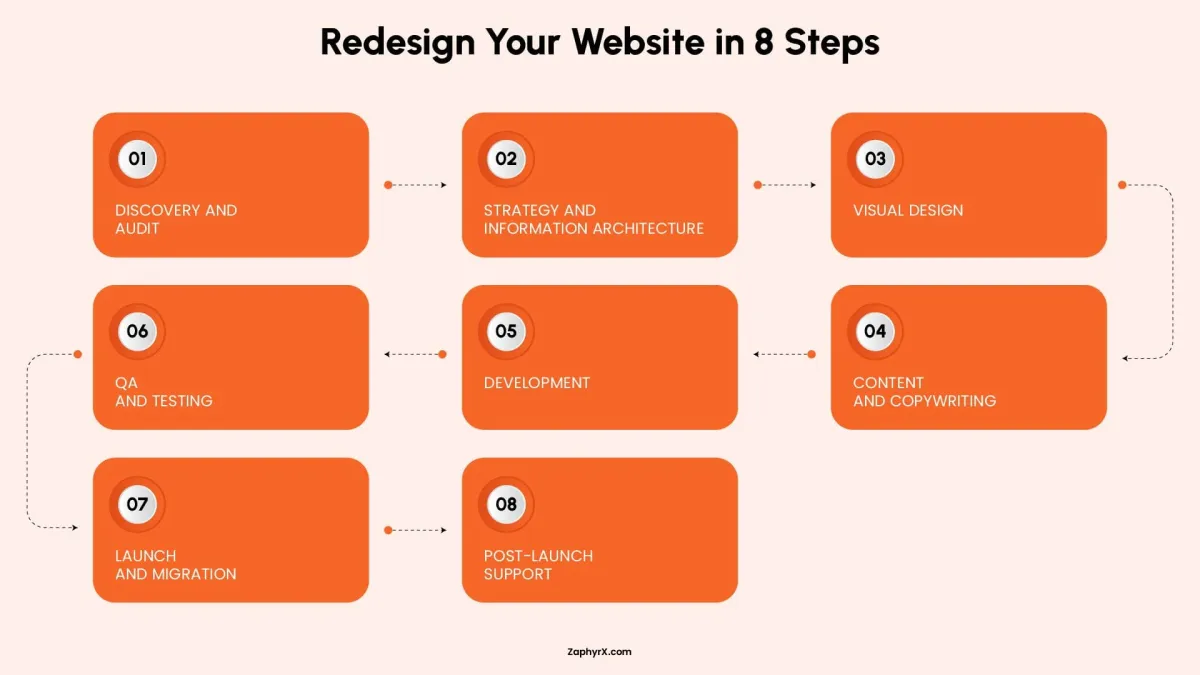
1. Discovery and Audit (10–15% of Project)
The redesign begins with a deep understanding of your business, users, and existing website. This phase includes stakeholder interviews, user research or testing, analytics review, competitor analysis, and a full technical audit. The output is a clear set of objectives and a roadmap of opportunities before any design or development work starts.
2. Strategy and Information Architecture (10–15% of Project)
In this phase, the website structure is planned in detail. It involves creating a sitemap, organizing content hierarchy, mapping user journeys, and defining calls-to-action. This step ensures the website is logically structured and aligned with user behavior and business goals before design starts.
3. Visual Design (25–35% of Project)
This phase brings the website to life visually. Designers produce wireframes, high‑fidelity mockups, and a reusable design system. Responsive layouts for mobile, tablet, and desktop are prepared. Multiple revision rounds are typical to refine the final look and feel.
4. Content and Copywriting (10–20% of Project)
Content creation or refinement happens here. Tasks include writing page copy, sourcing images, and developing supporting materials such as case studies, portfolio items, or blog posts. This phase is often underestimated but directly impacts user engagement and SEO performance.
5. Development (25–35% of Project)
Approved designs are turned into a fully functional website. Development includes CMS setup, coding (front‑end and back‑end), third‑party integrations, form creation, analytics implementation, and custom feature building. Performance optimization and responsive behavior are also handled during this stage.
6. QA and Testing (5–10% of Project)
Before launch, the website undergoes thorough testing to ensure everything works correctly. This includes cross‑browser and cross‑device testing, speed optimization checks, form validation, link testing, and basic accessibility reviews. The goal is a smooth, error‑free user experience.
7. Launch and Migration (≈5% of Project)
This phase deploys the website to the live environment. Key tasks include DNS configuration, implementing 301 redirects, verifying content accuracy, setting up analytics tools, and submitting the site to search engines. Proper execution prevents traffic loss, data loss, or SEO disruptions.
8. Post-Launch Support (Variable)
After launch, ongoing support stabilizes and improves the website. Services include bug fixes, performance monitoring, security updates, and small adjustments based on real user behavior. The scope and cost depend on the level of retainer or ongoing maintenance agreement.
How to Plan Your Website Redesign Budget
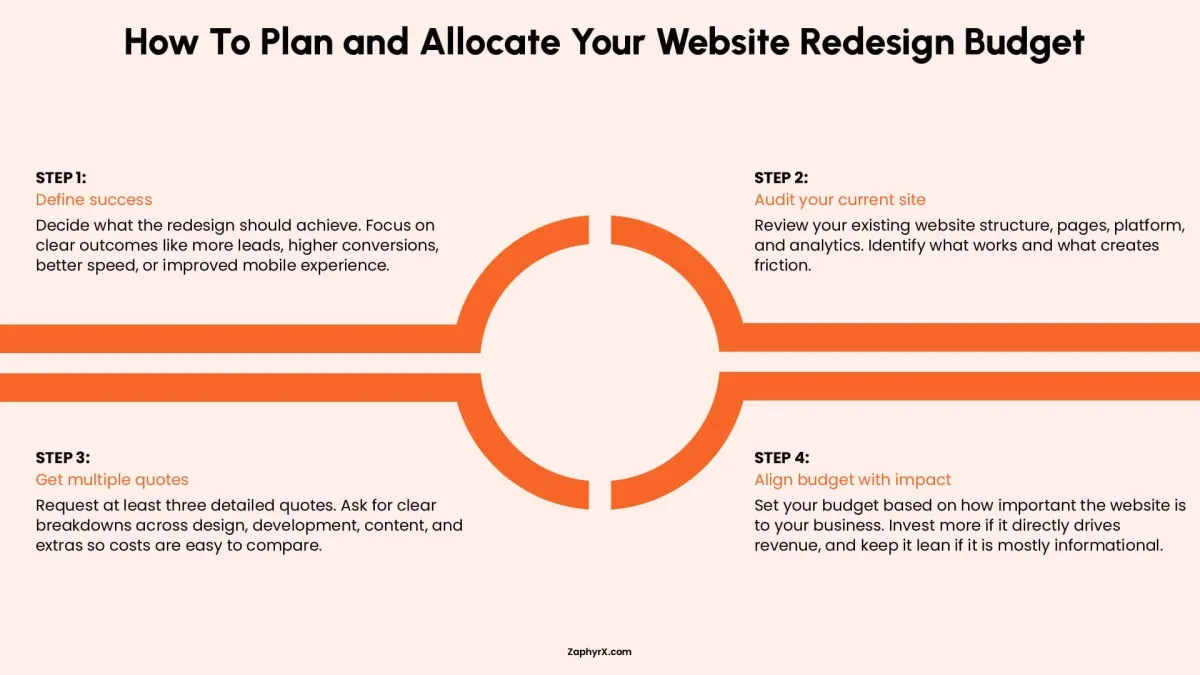
Step 1: Define What Success Actually Means
Start by clearly defining the purpose of your redesign. “A new website” is not a goal, measurable outcomes are. For example: increased lead generation, higher conversion rates, improved mobile usability, faster page load times, or reduced bounce rates on key pages. When success is defined in measurable terms, it becomes much easier to determine the right scope, features, and budget.
Step 2: Audit Your Existing Website
Before requesting quotes, understand your current setup in detail. Review how many pages you have, what platform you are using, what functionality already exists, and how users are interacting with your site. Analytics data is especially important, identifying where users drop off, which pages perform well, and where friction exists. A clear understanding of your current state allows agencies or freelancers to provide far more accurate estimates.
Step 3: Collect Multiple Detailed Quotes
Always request at least three quotes from different providers. The first gives you a baseline, the second provides comparison, and the third helps reveal the true market range. Avoid vague pricing, ask for itemized breakdowns that separate design, development, content, and additional services. This makes it easier to understand what you are actually paying for.
Step 4: Match Your Budget to Business Impact
Your website budget should reflect its role in your business. If your website directly drives revenue, even a higher investment can deliver strong returns if it improves conversion rates or user experience. On the other hand, if your website is primarily informational, a simpler and more cost-efficient solution may be sufficient. The key is not to choose the cheapest option, but the one that best aligns cost with business impact.
Red Flags to Watch for When Getting Website Quotes
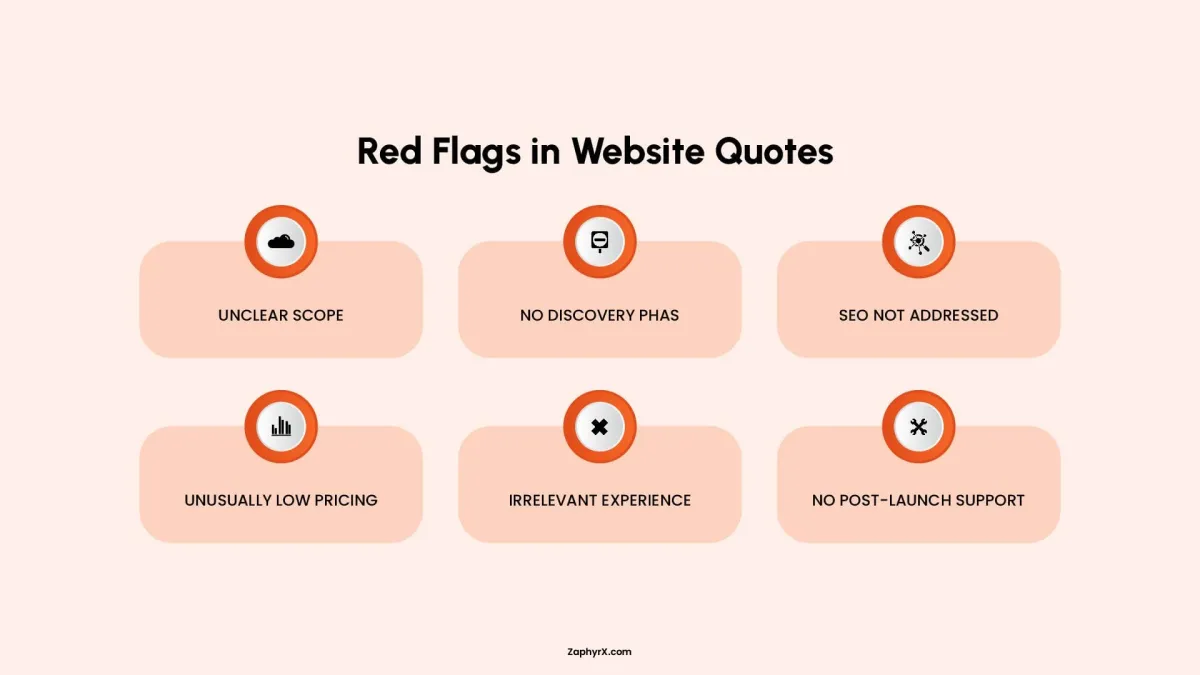
When getting website quotes, it is crucial to look beyond the final price to avoid hidden costs, poor quality, or abandonment of the project. Major red flags include:
- Vague scope of work: A proper quote should clearly explain what is included. This means number of pages, design revisions, functionality, testing, and deliverables. Phrases like “full redesign” without detail usually lead to misunderstandings later.
- No discovery or planning phase: Jumping straight into design without understanding the business, users, and goals often results in a site that looks new but does not solve the right problems.
- No mention of SEO migration: If your website already has traffic, SEO should be part of the discussion. Redirects, URL structure, and metadata handling should be addressed before work begins, not after launch.
- Prices that seem unusually low: Extremely low quotes often reflect template-based work with minimal customization. That can be fine for basic needs, but it is not the same as a properly planned redesign.
- Irrelevant or mismatched portfolio: A strong design portfolio is not enough on its own. What matters is whether the provider has experience with similar business models or complexity levels.
- No post-launch web support plan: A website is not finished at launch. There should be clarity on bug fixes, support period, and any follow-up improvements after the site goes live.
Making the Right Website Redesign Decision
Website redesign costs in 2026 can vary a lot, but the real difference comes down to your goals, the scope of work, and who you work with. The most important thing is to match the investment with what your business actually needs.
A well-planned redesign can improve your website’s speed, make it easier to use, build more trust with visitors, and help you get more customers. Focus on choosing the approach that best fits your budget and objectives instead of just picking the cheapest option.
Start by being clear about what you want your new website to achieve. Review your current site, get quotes from a few different providers, and make sure the proposal clearly covers design, development, SEO, and support after launch.
If you’re not sure which option is best for your situation, feel free to reach out for a quick, no-pressure review of your current website. We can help you understand the realistic options and costs based on your specific needs.
Frequently Asked Questions
For most small businesses, a meaningful redesign costs between $3,000 and $15,000. At the lower end, you are working with a freelancer on a defined scope of 5 to 15 pages. At the higher end, a small agency is handling design, development, content, and SEO migration for a more comprehensive site.
In most cases, redesigning is cheaper than a ground-up rebuild, but not always by as much as people expect. If your existing site has significant technical debt, a messy CMS, or a platform that no longer fits your needs, a rebuild may be the smarter spend even if it costs more upfront.
Most businesses benefit from a meaningful redesign every 3 to 4 years, with smaller updates and optimizations happening throughout. Research from StateWP suggests that the best approach is regular iterative updates rather than letting a site age for 5 or 6 years before doing a big overhaul. Forbes notes that some leading companies do partial redesigns as frequently as twice a year to stay current.
Yes, badly managed ones can. URL changes without proper 301 redirects, missing metadata, altered internal linking structure, and reduced page speed can all negatively affect rankings. Properly managed redesigns with thorough SEO audits and migration plans typically protect or improve rankings. Always ask how your provider handles SEO migration.
10 to 20% of the total project cost is standard practice. For a $20,000 project, budget an additional $2,000 to $4,000 for scope changes, unexpected technical issues, or decisions that emerge during the process.
Not necessarily. Many freelancers and most agencies handle both. However, if you hire a designer-only freelancer, you will need a separate developer, and you will be responsible for coordinating them. Some clients prefer this approach for control; others find the coordination burden not worth the potential cost saving.
A clear scope of work with specific deliverables, a timeline with milestones, a payment schedule, explicit details on revision rounds, clarity on what is and is not included (copy, photography, SEO, training), and a description of the post-launch support period.
