
Choosing a custom software development company takes more than comparing service pages. Companies often offer similar services, but their experience, technical expertise, industries, project sizes, and development approaches can vary significantly.
We reviewed software development companies across the USA and evaluated them based on their capabilities, areas of specialization, industry experience, client focus, and overall fit for different types of projects. Some are better suited to enterprise software, while others focus on startups, SaaS products, mobile applications, or industry specific platforms.
Based on that research, these are 10 of the best custom software development companies in the USA for 2027. We have included what each company does best, the types of projects they handle, and who they may be a good fit for.
What Is Custom Software Development?
Custom software development is the process of designing and building software specifically for a particular business, organization, or group of users. That could mean building an internal system for managing operations, a customer facing web or mobile application, a SaaS product, or software that connects several existing platforms.
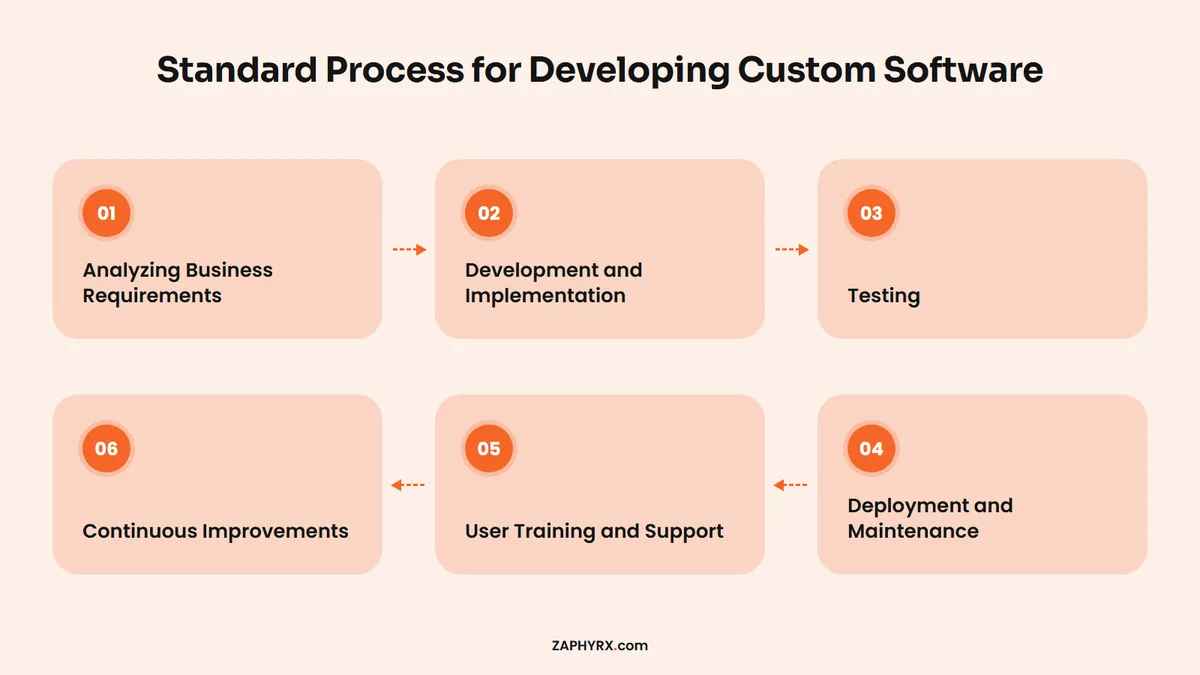
The process usually starts by defining the business requirements and understanding how users will interact with the software. The development team then plans the architecture, designs the interface, writes the code, tests the application, and deploys it. Depending on the project, the team may also handle integrations, data migration, security, infrastructure, and ongoing maintenance.
Benefits of Hiring a Custom Software Development Company
Hiring a custom software development company can help businesses replace disconnected tools, eliminate manual processes, and build software around workflows that standard platforms cannot support effectively. The main benefits include:
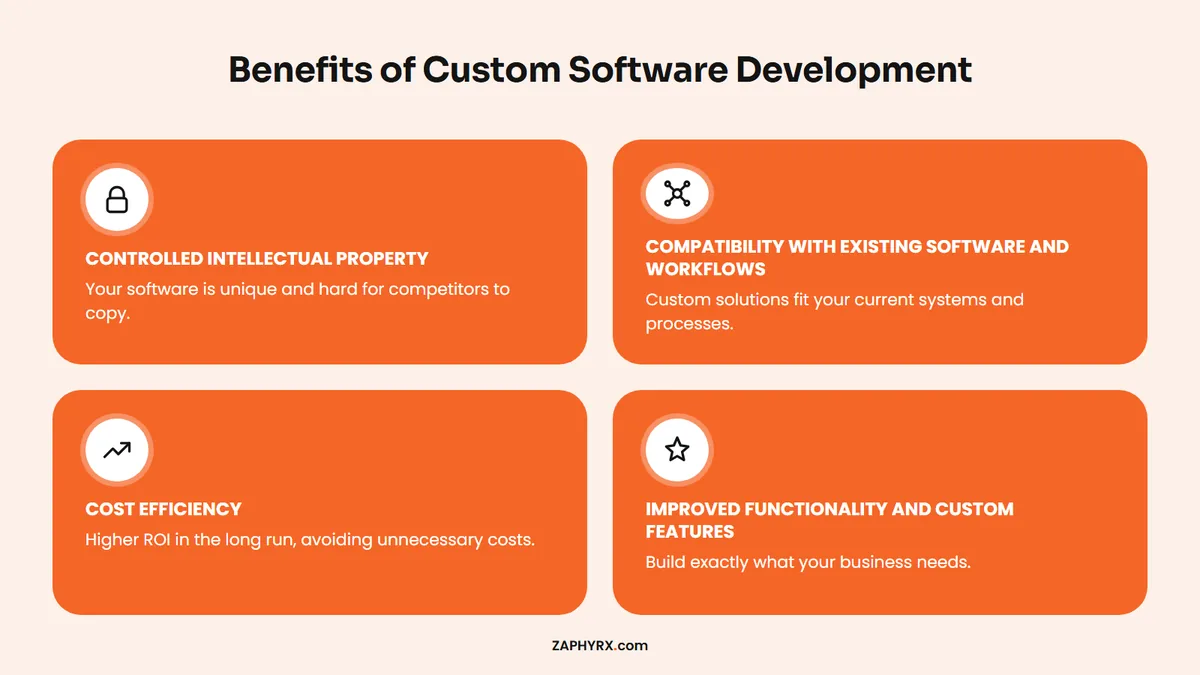
- Controlled Intellectual Property: Custom software can give your business greater control over the intellectual property behind its workflows, features, and functionality. Instead of relying on the same product available to competitors, you can build technology around processes that make your business different and harder to replicate.
- Compatibility With Existing Software and Workflows: Custom applications can be designed to work with the systems you already use, including CRMs, ERPs, accounting platforms, databases, APIs, and third party tools. This helps reduce data silos and prevents employees from constantly switching between disconnected systems.
- Cost Efficiency Over Time: Custom development requires an upfront investment, but it can create long term savings when it replaces multiple tools, reduces repetitive manual work, or removes inefficient processes. The focus should be on the total cost of ownership and measurable operational value rather than simply the initial development price.
- Improved Functionality and Custom Features: You can build the specific features your business actually needs instead of paying for a large set of generic functions. Custom development is particularly useful when your workflows, reporting requirements, approval processes, or customer experiences do not fit neatly into an off the shelf product.
The Global Custom Software Development Market in 2027
The custom software market is growing quickly as businesses invest in software built around their own processes, data, and technology environments. The global custom software development market was valued at $45.4 billion in 2025 and is estimated to reach $53.5 billion in 2026. Grand View Research projects it to reach $178.9 billion by 2033, representing an 18.8% CAGR from 2026 to 2033.
A few numbers show where that demand is coming from:
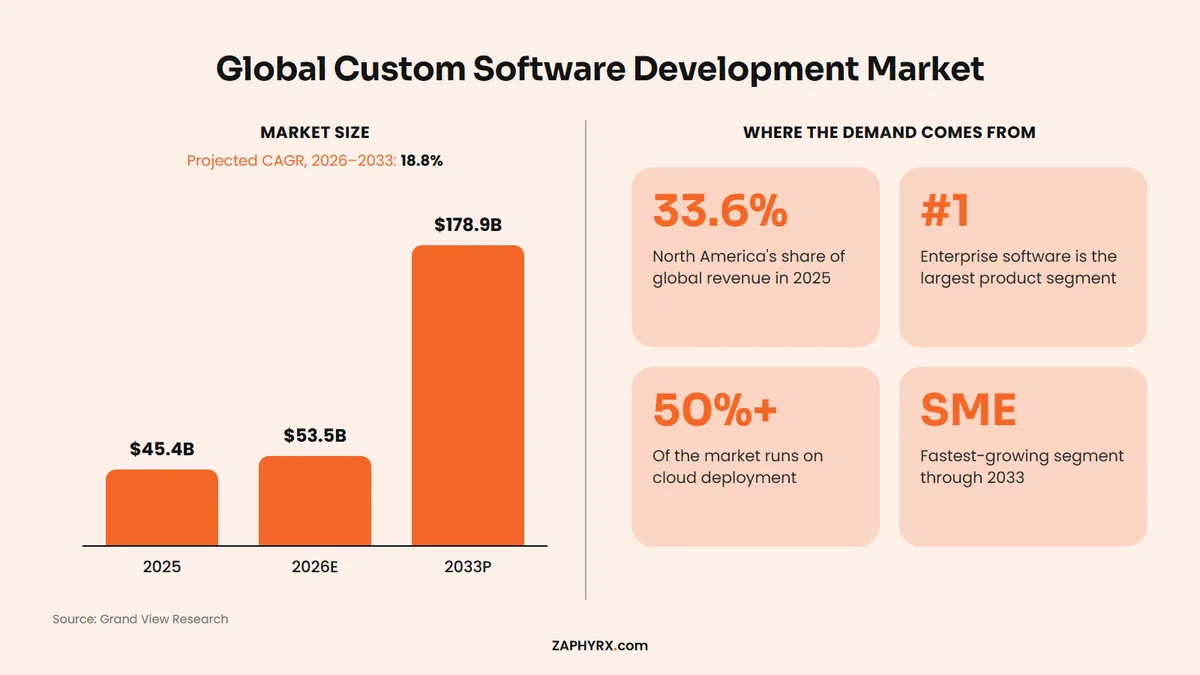
North America accounted for 33.6% of global custom software development revenue in 2025, with the U.S. holding the largest share within the region. Enterprise software also represented the largest product segment, while cloud deployment accounted for more than half of the market.
The growth is not limited to large corporations. Grand View Research expects the SME segment to register the fastest growth during the forecast period. Businesses are increasingly using custom software to automate workflows, connect existing systems, support industry specific requirements, and avoid forcing their operations into software that does not fit.
That growth also explains why the choice of development partner matters. As custom software moves beyond basic applications into cloud platforms, AI enabled systems, enterprise applications, and connected business environments, companies need development expertise that matches the complexity of what they are trying to build.
Top Custom Software Development Companies in 2027 (At a Glance)
Before looking at each company in detail, this comparison gives you a quick overview of the firms featured in this guide. It highlights their main strengths, services, and ideal use cases, making it easier to see how they differ and which provider may be the best fit for your needs.
| Company | Best For | Engagement Model | Main Strength | Main Limitation |
|---|---|---|---|---|
|
ZAPHYRX |
Integrated custom software and digital execution |
Project based, TaaS |
Business focused custom systems |
Less enterprise scale than global consultancies |
|
Thoughtworks |
Enterprise software engineering and modernization |
Consulting + engineering |
Deep engineering and modernization |
Premium pricing |
|
EPAM |
Large scale engineering and complex platforms |
Project + dedicated teams |
Massive technical depth and scale |
Can be excessive for smaller projects |
|
Globant |
AI first enterprise software |
Project + engineering teams |
AI and digital engineering |
Large organization can add complexity |
|
ScienceSoft |
Complex business applications and regulated industries |
Fixed price + T&M |
Transparent cost ranges and industry depth |
Large projects can become expensive |
|
Vention |
Scalable engineering teams |
Staff augmentation + dedicated teams + outsourcing |
Flexible team scaling |
Better suited to organizations able to manage technical teams |
|
Simform |
Cloud native development and modernization |
Project + dedicated teams |
Cloud, DevOps and modernization |
Broad range means fit depends heavily on project scope |
|
Goji Labs |
Product strategy, MVPs and digital products |
T&M + fixed fee for defined work |
Product strategy + design + development |
Less suited to huge enterprise transformation |
|
TELUS Digital |
Consumer digital experiences |
Product + engineering |
UX, mobile and digital experiences |
Enterprise oriented pricing and scope |
|
Closeloop Technologies |
Mid market custom business systems |
Milestone based |
Mid market product development |
Smaller scale than global engineering firms |
1. ZAPHYRX (Best for integrated custom software and digital execution)
ZAPHYRX is a strong fit for businesses that need software built around their existing workflows rather than a generic application. Its work spans custom CRM and ERP systems, SaaS platforms, web and mobile applications, API integrations, legacy modernization, UI/UX, and QA. It also offers Team as a Service for companies that need dedicated development resources without building the entire team internally.
Pricing: ZAPHYRX uses custom quotes based on project scope, technology, team requirements, and timeline. Contact us for pricing.
Why it ranks #1: We put ZAPHYRX first because it combines custom software development with broader digital execution without the enterprise scale and complexity of the largest firms on this list. That makes it a practical option for startups, SMBs, and mid market companies that need a substantial software project but do not necessarily need a global consultancy.
Best for: Custom CRM and ERP development, SaaS products, business applications, integrations, and companies replacing manual or outdated processes.
2. Thoughtworks (Best for enterprise software engineering and modernization)
Thoughtworks is better suited to organizations dealing with complex technology environments than companies simply looking for developers. Its work includes software engineering, legacy modernization, platform engineering, data modernization, product development, cloud, and enterprise AI.
Pricing: Thoughtworks does not publish standard project rates. Its enterprise consulting and engineering model generally places it toward the premium end of the market.
Why it ranks #2: Thoughtworks has exceptional depth in software engineering and modernization, but that depth comes with a level of consulting and delivery complexity that smaller projects may not need. We rank it just behind ZAPHYRX because its biggest advantage appears in large, technically demanding transformation programs.
Best for: Enterprises modernizing legacy systems, rebuilding core platforms, or introducing modern engineering and AI practices into established technology environments.
3. EPAM (Best for large scale engineering and complex platforms)
EPAM is built for software projects where scale, technical specialization, and global delivery matter. Its engineering capabilities cover application development, cloud, data, DevOps, testing, cybersecurity, APIs, AI, and enterprise modernization. The company also supports dedicated engineering teams and product development.
Pricing: Costs depend heavily on the number and seniority of engineers, project complexity, technology requirements, and engagement length.
Why it ranks #3: EPAM may be one of the strongest choices here for a highly complex enterprise platform, but its scale can be unnecessary for smaller or mid market projects. We placed it third because the company delivers its greatest value when the software challenge genuinely requires substantial engineering resources.
Best for: Large enterprises building complex platforms, modernizing major systems, or needing large distributed engineering teams.
4. Globant (Best for AI first enterprise software development)
Globant has made AI a central part of its software development strategy. Alongside conventional software engineering, it works across AI, cloud, data, digital products, UX, and enterprise transformation. Its newer AI focused development approach incorporates AI agents into parts of the software lifecycle.
Pricing: Enterprise engagements are generally scoped around the required team, technology, project complexity, and duration.
Why it ranks #4: Globant stands out when AI is a meaningful part of the software strategy rather than an add on feature. Its large engineering organization also makes it suitable for enterprise programs. However, that scale makes it less compelling for straightforward custom applications.
Best for: Enterprises building AI enabled products, modernizing digital platforms, or combining software engineering with large scale AI and data initiatives.
5. ScienceSoft (Best for complex business applications and regulated industries)
ScienceSoft has a particularly broad custom software portfolio, with experience across enterprise applications, healthcare software, banking systems, analytics, AI, IoT, integrations, and modernization. Its industry experience is especially relevant when security, compliance, or specialized workflows affect the development process.
Pricing: ScienceSoft is relatively transparent compared with many competitors. It publishes software development estimates ranging from roughly $30,000 to $4 million+, depending on the project.
Why it ranks #5: Its combination of technical breadth, regulated industry experience, and public pricing guidance makes it a strong choice for complex applications. We placed it below the larger engineering firms because its strongest advantage is specialization rather than sheer delivery scale.
Best for: Healthcare, financial services, manufacturing, and other businesses building complex or highly regulated software.
6. Vention (Best for scalable engineering teams)
Vention focuses heavily on providing engineering capacity through dedicated teams, staff augmentation, and outsourced development. Its teams cover web and mobile development, SaaS, cloud, AI, DevOps, data engineering, QA, and modernization.
Pricing: Vention uses custom pricing based on the roles, skills, team size, and length of the engagement rather than a single published project rate.
Why it ranks #6: Vention is particularly useful when a company already has product direction and technical leadership but needs more engineers to execute. It ranks lower for buyers who need extensive product strategy or business process consulting before development begins.
Best for: Growing companies that need to expand an existing engineering team or build a dedicated development team for a longer term project.
7. Simform (Best for cloud native applications and modernization)
Simform has a strong technical focus on cloud based software, DevOps, application modernization, and scalable product development. Its services include custom applications, cloud migration, cloud native development, data engineering, AI, and enterprise software.
Pricing: Simform reports that many custom software projects fall in the $50,000 to $500,000 range, although complex enterprise projects can cost considerably more.
Why it ranks #7: Simform becomes particularly attractive when infrastructure and architecture are central to the project. Its cloud and modernization expertise is a clear strength, but companies looking primarily for product strategy or business process transformation may find other firms on this list more suitable.
Best for: Businesses modernizing legacy applications, moving workloads to the cloud, or building scalable cloud native products.
8. Goji Labs (Best for product strategy, MVPs, and digital products)
Goji Labs combines product strategy, UX/UI design, and software development, making it particularly relevant to companies that are still shaping a product before committing to full development. Its work includes MVPs, web and mobile applications, AI products, product strategy, and digital transformation.
Pricing: Goji Labs states that its typical engagements range from approximately $50,000 to $1 million, depending on scope.
Why it ranks #8: Its strength is the connection between product thinking and development. That makes it attractive for startups and product teams, but less appropriate for enormous enterprise modernization programs where global engineering scale matters more.
Best for: Startups, founders, and product teams developing an MVP or turning an early product concept into a production ready application.
9. TELUS Digital (Best for consumer facing digital experiences)
WillowTree is now part of TELUS Digital, bringing its established product design and development capabilities into TELUS Digital’s broader technology and customer experience business. Its strengths include mobile and web applications, product strategy, UX/UI, digital experiences, AI, and enterprise technology.
Pricing: TELUS Digital does not publish standard custom software project prices. Enterprise engagements are scoped according to the product, technology, team, and transformation requirements.
Why it ranks #9: This company stands out most when software is directly tied to the customer experience. Its design and product expertise can be particularly valuable for consumer applications, although a business building an internal system may find a more specialized development firm a better fit.
Best for: Consumer brands, enterprises, and organizations building customer facing websites, mobile applications, and digital products.
10. Closeloop Technologies (Best for mid market custom business systems)
Closeloop Technologies works with startups and established businesses on custom software, web and mobile applications, cloud solutions, integrations, AI, and modernization. Its positioning makes it particularly relevant to companies that need a custom system without engaging one of the largest global technology consultancies.
Pricing: Closeloop lists MVP development starting around $50,000, while larger digital platforms can fall around $150,000 to $400,000, depending on requirements.
Why it ranks #10: Closeloop offers a practical middle ground for smaller and mid market buyers, but it does not have the global engineering scale of EPAM, Globant, or Thoughtworks. Its ranking reflects project scope rather than poor quality.
Best for: Startups and mid market companies developing custom business applications, MVPs, integrations, or modernizing existing software.
How We Selected These Custom Software Development Companies
We did not rank these companies by size, brand recognition, or the number of services listed on their websites. We looked at what each company can actually deliver and where that expertise makes the most sense for a buyer.
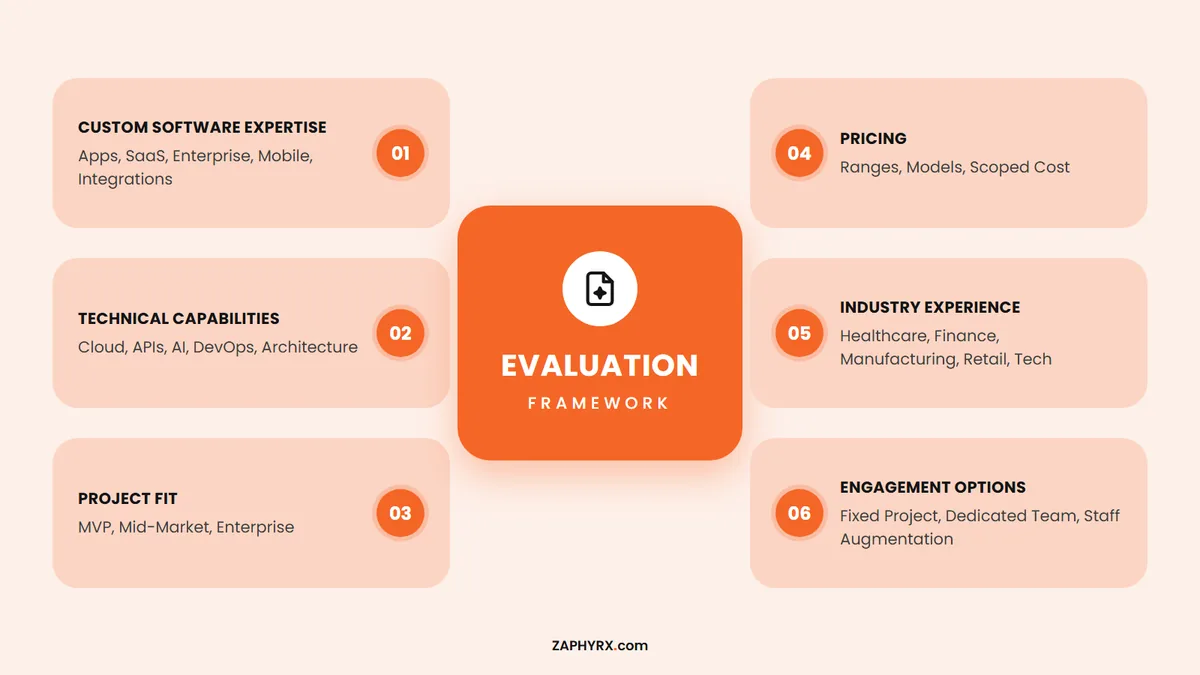
Our evaluation focused on several factors:
- Custom software expertise: We looked at whether the company genuinely builds software from the ground up, including business applications, SaaS platforms, enterprise systems, mobile apps, and integrations.
- Technical capabilities: We compared their experience across areas such as cloud development, APIs, AI, databases, DevOps, application modernization, and software architecture.
- Project fit: A company that excels at enterprise modernization is not automatically the best choice for an MVP or a mid market business application. We considered the types and sizes of projects each firm is best equipped to handle.
- Pricing: We reviewed published pricing, project ranges, engagement models, and pricing information where available. Because most custom software projects require individual scoping, we did not treat an advertised starting price as a final project cost.
- Industry experience: We considered whether companies have relevant experience in industries with specialized requirements, including healthcare, financial services, manufacturing, retail, and technology.
- Engagement options: We looked at whether companies offer fixed project engagements, dedicated development teams, staff augmentation, or other flexible models.
This is also why the list is not simply arranged from the largest company to the smallest. The right software development partner depends on the project. A company with thousands of engineers may be the right choice for a global platform but unnecessary for a $100,000 business application. Our rankings reflect that difference.
How Much Does Custom Software Development Cost in 2027?
Custom software development typically costs $25,000 to $1 million+ in 2027, depending on the project’s scope, complexity, integrations, security requirements, and development team. A small internal tool may cost $25,000 to $75,000, while a mid-sized business application can run $75,000 to $250,000. Complex enterprise platforms can exceed $250,000 and reach $1 million or more.
| Project type | Typical 2027 cost |
|---|---|
|
Simple internal tool |
$25,000 to $75,000 |
|
MVP or early product |
$30,000 to $80,000 |
|
Mid sized business application |
$75,000 to $250,000 |
|
Customer facing platform |
$150,000 to $600,000 |
|
Enterprise software |
$250,000 to $1M+ |
The biggest cost drivers are development hours and hourly rates. US based teams can command substantially higher rates than offshore teams, but a lower hourly rate does not necessarily mean a lower total project cost. The amount of engineering work, project management, QA, integrations, data migration, and rework ultimately determines the final bill.
For a realistic budget, get the project scoped before comparing quotes. Two companies can quote very different amounts for what appears to be the same software because they may be making different assumptions about features, integrations, testing, infrastructure, and post launch support.
Should You Build Custom Software or Buy an Existing Platform?
Buy an existing platform if it already solves 80% or more of your requirements. Build custom software when your workflows, integrations, or competitive advantage require something off the shelf software cannot provide.
| Choose an Existing Platform | Choose Custom Software |
|---|---|
|
Your requirements are fairly standard |
Your workflows are unique |
|
You need to launch quickly |
You need complete control over functionality |
|
You want predictable subscription costs |
The software will become a core business asset |
|
You can adapt your processes to the platform |
The platform needs to adapt to your processes |
|
Integrations are already available |
You need complex or proprietary integrations |
|
You do not need significant customization |
You need functionality competitors cannot easily replicate |
The cost difference matters too. Buying software usually means a recurring subscription with implementation and customization costs on top. Custom development requires a larger upfront investment, plus ongoing maintenance, hosting, security, and development costs.
There is also a middle ground. Customize an existing platform when its core functionality fits your needs but you need additional workflows, integrations, or interfaces. This can give you more flexibility without the cost and timeline of building everything from scratch.
How to Choose a Custom Software Development Company
Start with the business problem, not the technology. Before speaking with development companies, define what the software needs to improve, who will use it, which systems it must connect with, and what success should look like. This gives you something concrete to evaluate proposals against.
Then compare potential partners on these factors:
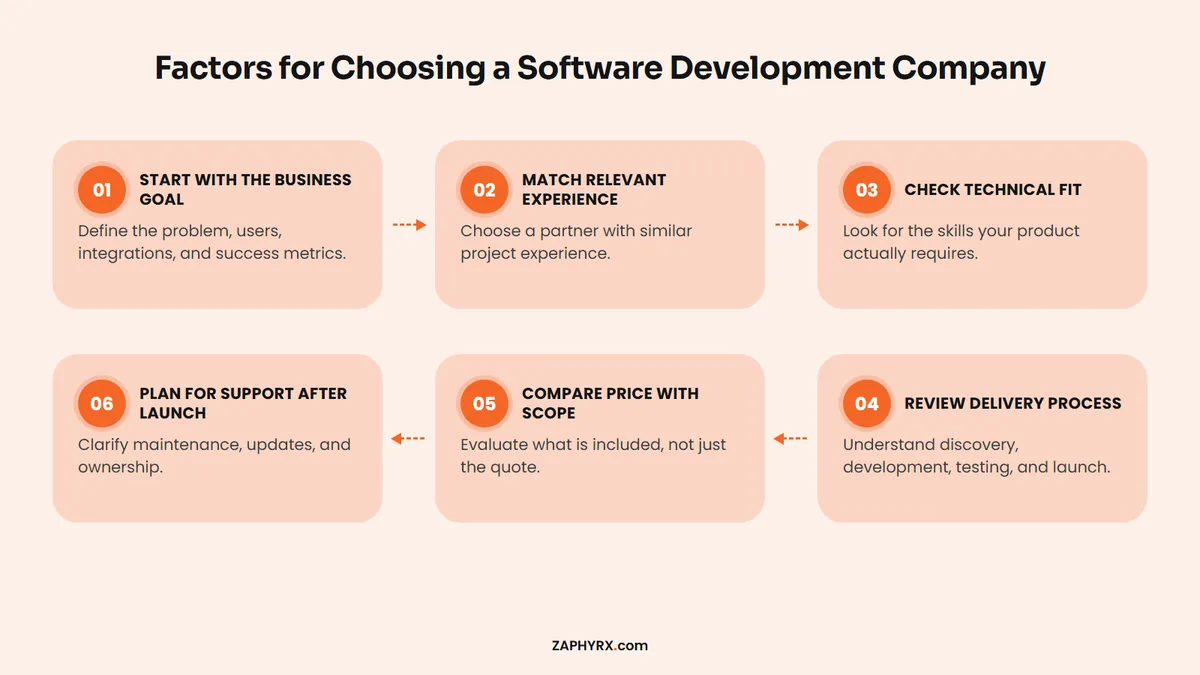
1. Look for relevant project experience
Do not choose a company simply because it has built a lot of software. Look for experience that matches your situation. If you need an internal business application, find out whether the company has built similar systems. If you are developing a SaaS product, look for experience with SaaS architecture, user management, billing, APIs, and scalability. The closer their previous work is to your project, the less time they may need to figure out the basics.
2. Evaluate the technical expertise you actually need
A development company may list dozens of technologies, but that does not mean you need all of them. Focus on whether the team has the technical skills your project requires. For example, a project that needs to connect an existing CRM with an ERP may require strong API and integration experience. A customer facing application may require mobile, cloud, security, and scalability expertise. If AI is part of the product, ask about their experience building and deploying AI features rather than simply looking for “AI” on their services page.
3. Understand how they will build the software
Ask what happens after you sign the contract. A reliable development partner should have a clear process for understanding requirements, designing the solution, developing the software, testing it, launching it, and handling changes. You should also know who will manage the project, how often you will receive updates, and how the team handles delays or changes in scope. A clear process makes it easier to control costs and avoid misunderstandings.
4. Compare pricing based on what you are actually getting
Do not compare quotes based on the final number alone. A $100,000 proposal may include extensive testing, project management, infrastructure setup, documentation, and post launch support, while a cheaper proposal may leave some of those costs out. Ask whether the company uses fixed pricing, time and materials, or a dedicated team model. Then check exactly what the estimate includes, what could increase the cost, and how additional work gets approved.
5. Check communication and project ownership
Software projects involve hundreds of decisions. Someone needs to keep those decisions organized and make sure the development team understands what the business actually needs. Find out who your main contact will be, how frequently the team communicates with you, where requirements are documented, and how quickly they respond to questions. You should also know who has responsibility for keeping the project on track.
6. Ask what happens after the software launches
Launching the software is not the end of the project. Your application may need bug fixes, security updates, infrastructure management, performance improvements, and new features after launch. Before signing, ask what support the company provides after deployment and how that support is priced. Also clarify whether you will have access to the source code, documentation, development environments, and other assets you need to maintain the software.
Finally, compare companies based on fit rather than price alone. The right partner should understand your business problem, have the technical expertise to solve it, communicate clearly throughout development, and give you a realistic picture of both the initial investment and the ongoing cost.
Which Custom Software Development Company Is Best for Your Project?
The best company for your project is not necessarily the one at the top of the list. It is the one that fits the way your project needs to be planned, built, and managed. Before making a decision, ask yourself a few practical questions:
How clearly defined is the project?
If you already know what you need to build, you can focus on finding a team that can execute the project efficiently. If the idea is still taking shape, you may need a partner that can help turn business requirements into a workable product before development begins.
How complex is the technology?
A straightforward business application does not require the same level of engineering resources as a platform involving multiple systems, large data sets, complex infrastructure, or demanding security requirements. Match the technical depth of the development partner to the actual difficulty of the project.
How involved will your internal team be?
Some businesses want an outside company to take responsibility for the entire project. Others already have developers and need additional specialists to fill specific gaps. Your preferred working model should influence which companies make the shortlist.
What happens after launch?
Consider whether you need a one time development project or expect the software to evolve continuously. If you will need regular improvements, maintenance, testing, and new functionality, make sure the company’s engagement model works for an ongoing relationship.
What does success look like?
Set a few measurable outcomes before choosing a partner. You might want to reduce manual work, replace several disconnected systems, launch a new revenue generating product, improve customer experience, or make an existing process easier to manage. These goals give you a better basis for evaluating proposals than technical features alone.
Once you have answered these questions, narrow the list to two or three companies and give each one the same project information. Compare their proposed approach, timeline, assumptions, communication process, ownership terms, and total expected investment.
Take the Next Step With a Software Development Partner
Choosing a custom software development company is ultimately about fit, not features. Once you have narrowed your options, do not rely on rankings or sales pitches alone. Share the same requirements with two or three shortlisted companies and compare how each approaches your project, from scope and technology to timeline, cost, ownership, and ongoing support.
Then take the conversation one step further. Ask each provider to explain how they would approach your specific requirements, where they see potential technical challenges, and what the first phase of development would look like. The right partner should give you a clearer path forward, not leave you with more questions.
If you are ready to evaluate your project with a development partner, start with a discovery conversation with ZAPHYRX. You can use the session to clarify your requirements, explore the right technical approach, establish a realistic scope, and determine whether the project is viable before committing to full development. Schedule a consultation and take the next step toward building your software solution.
Frequently Asked Questions
The timeline depends on the size and complexity of the project. A simple internal application may take a few months, while a larger platform can require six months to a year or longer. Discovery, design, integrations, testing, revisions, and deployment can all affect the final timeline.
A US based company can make communication, time zones, contracts, and collaboration easier, but location should not be the only deciding factor. Evaluate the company’s technical expertise, communication process, project experience, pricing, and ability to work with your team. The best choice depends on your project’s requirements and priorities.
Ownership depends on the contract. Many custom development agreements transfer intellectual property rights to the client after payment, but this is not automatic. Before signing, clarify ownership of the source code, designs, documentation, databases, and other project assets. Also check whether the agreement includes any third party or open source components.
You do not need a complete technical specification. Start with the business problem, target users, key workflows, required integrations, essential features, and expected outcome. If you have existing systems, processes, wireframes, or documentation, share those as well. This gives development companies enough context to provide more useful estimates.
Yes. Custom software can connect with existing systems through APIs, databases, middleware, or other integration methods. The difficulty depends on what systems you use, how accessible their data is, and what those platforms support. Identify required integrations early because they can significantly affect both development effort and project cost.
For many projects, phased development can reduce risk. Instead of building every planned feature at once, you can launch the most important functionality first, collect feedback, and expand the product based on actual usage. This approach can also make a large project easier to budget, test, and manage.
First, determine why the budget increased. Common causes include new requirements, underestimated integrations, technical problems, or changes to the original scope. Your contract should explain how additional work gets estimated and approved. Regular progress reviews can also help identify budget issues before they become significant.
Look beyond testimonials on the company’s website. Review relevant case studies, speak with references when possible, examine the proposed contract, and ask detailed questions about the development team, communication, security, ownership, testing, and post launch support. A trustworthy company should be willing to explain its process and assumptions clearly.